How Long Do Preserved Roses Last, and What Actually Ruins Them?
By Eternal Rose editorial · Published · Updated
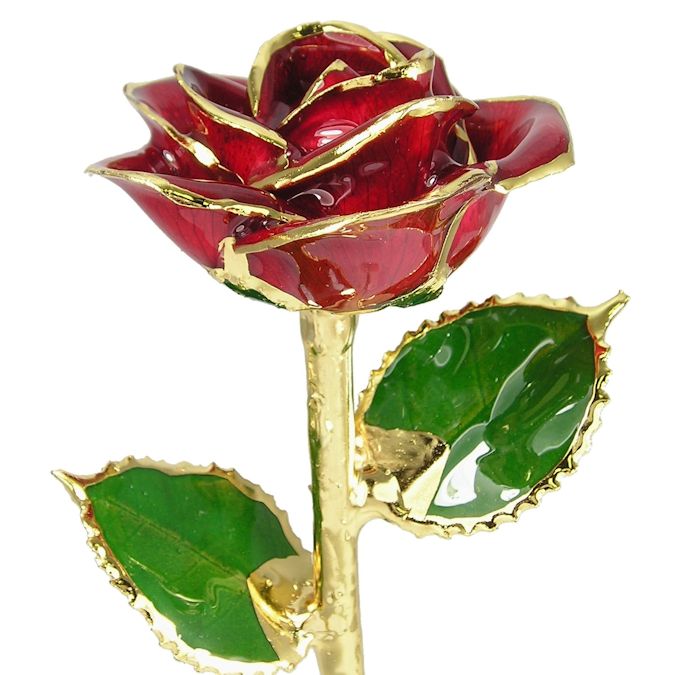
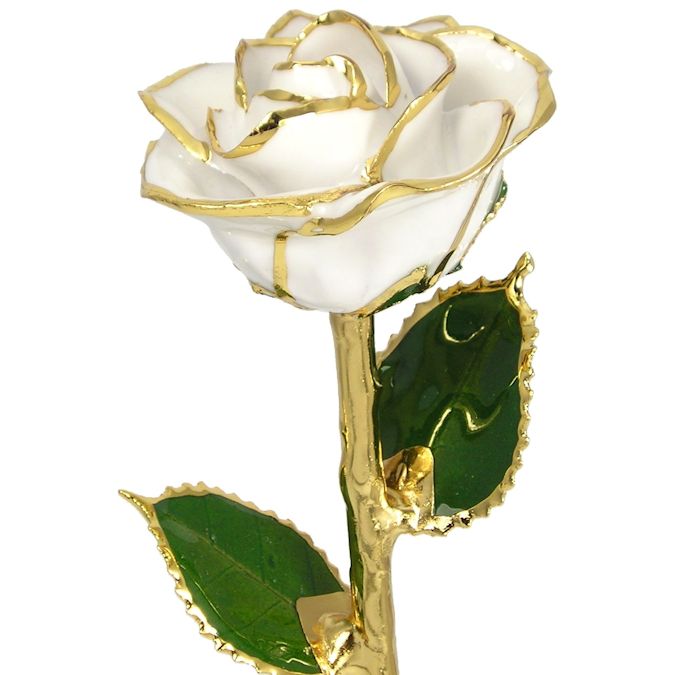
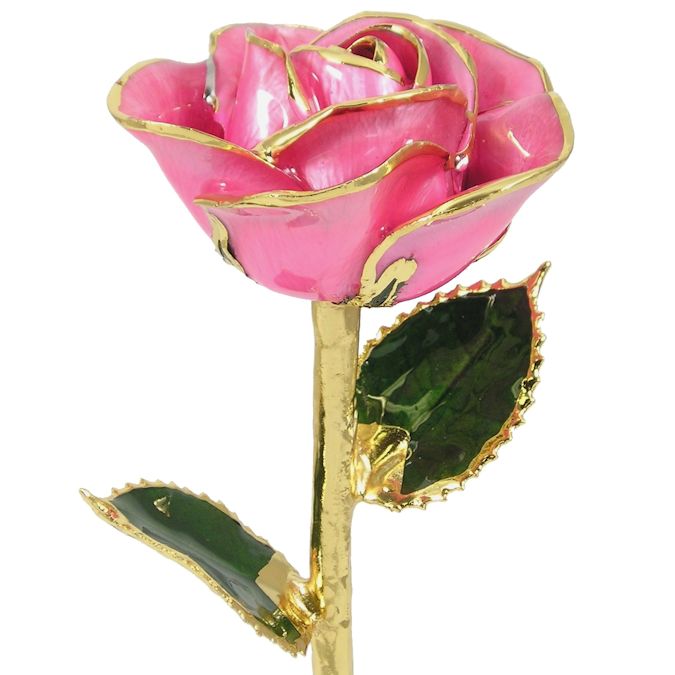
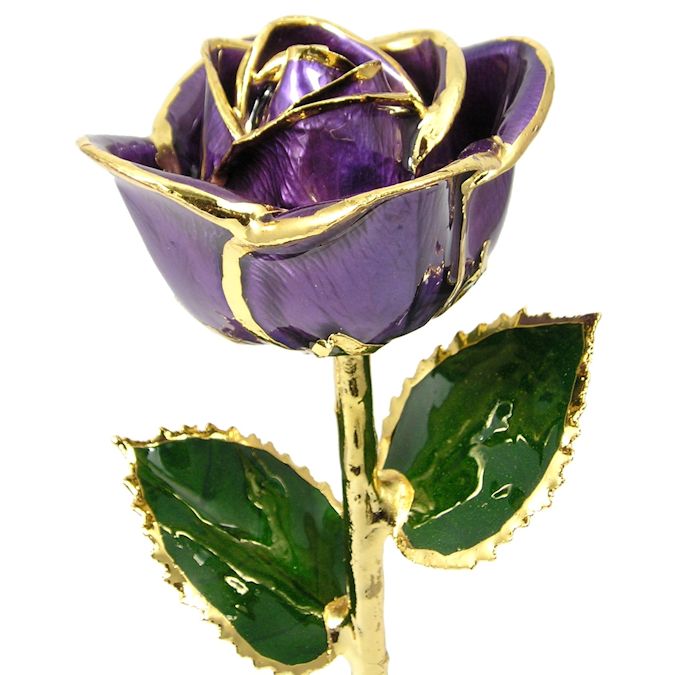
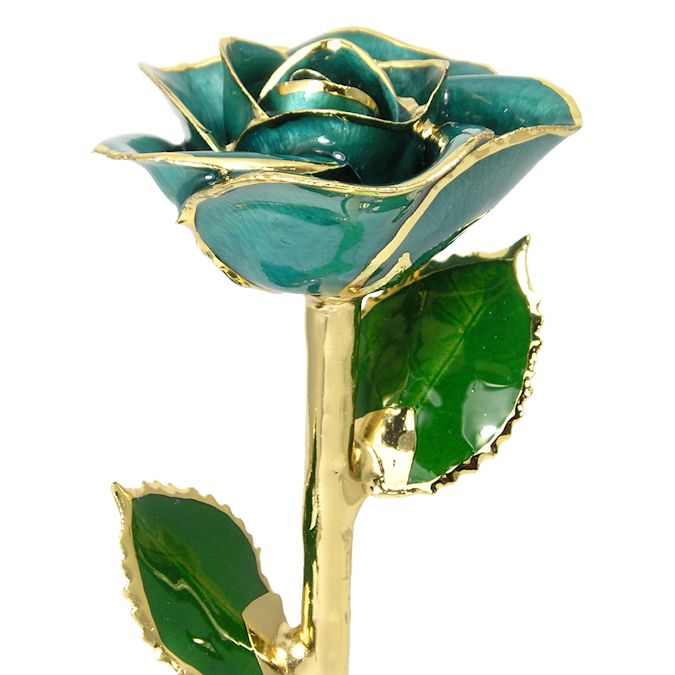
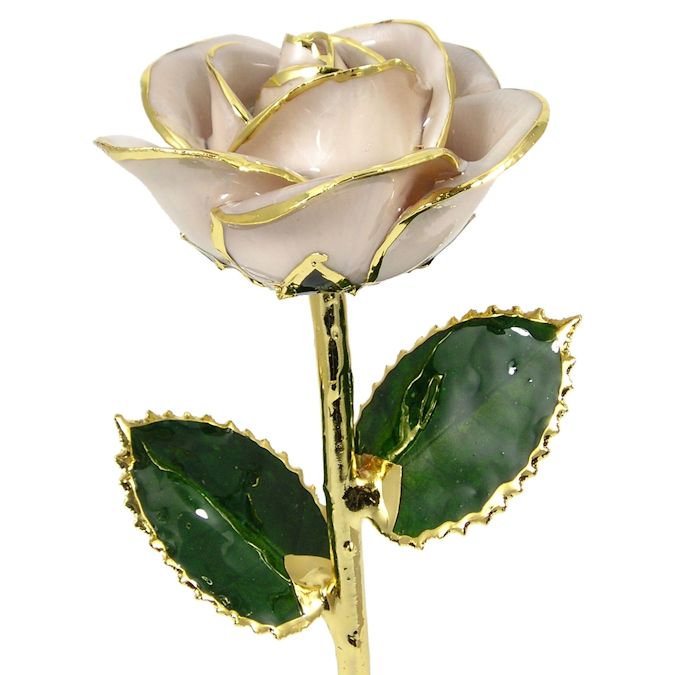
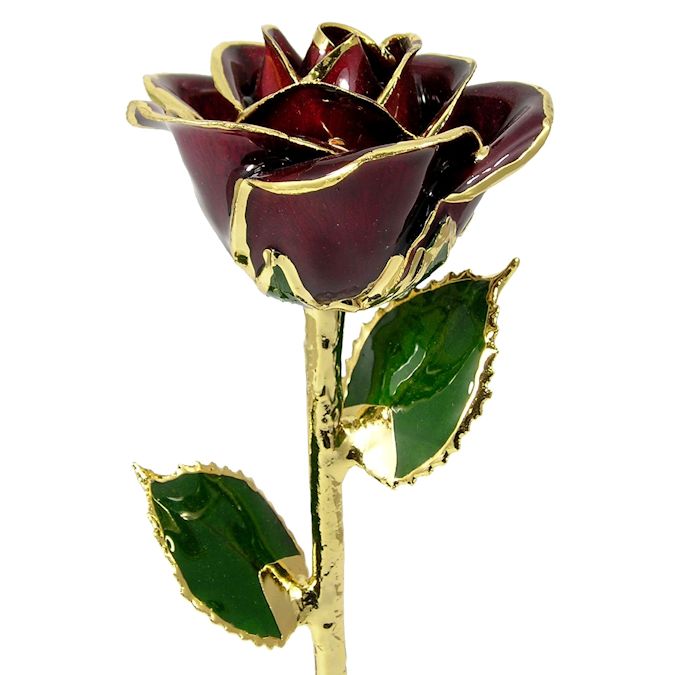
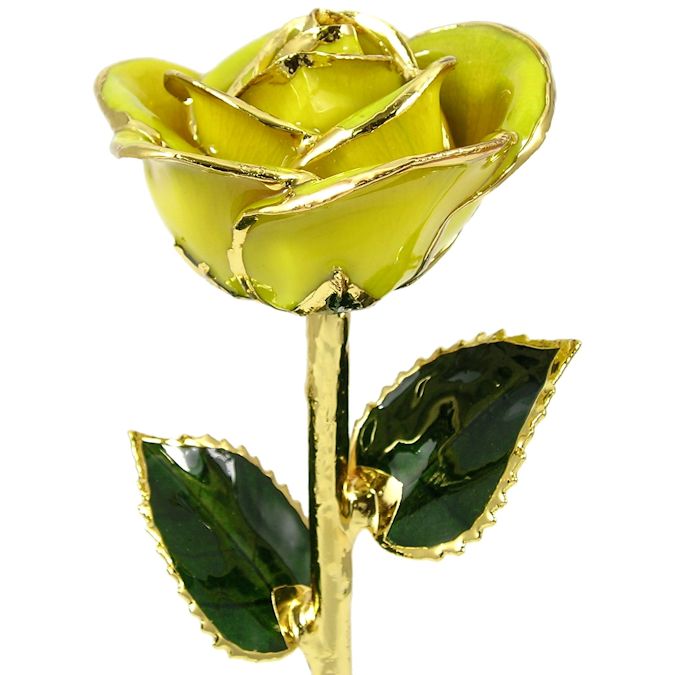
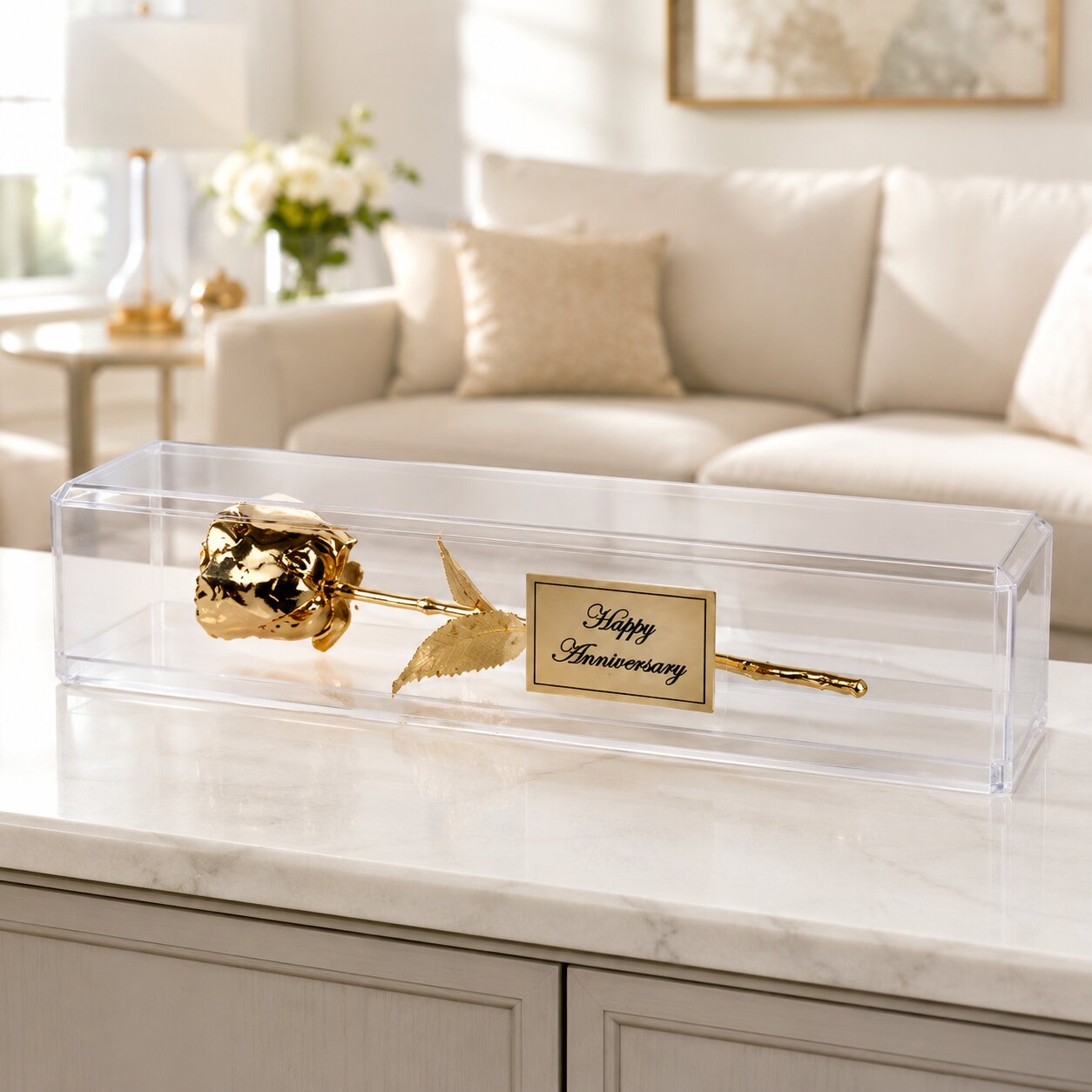
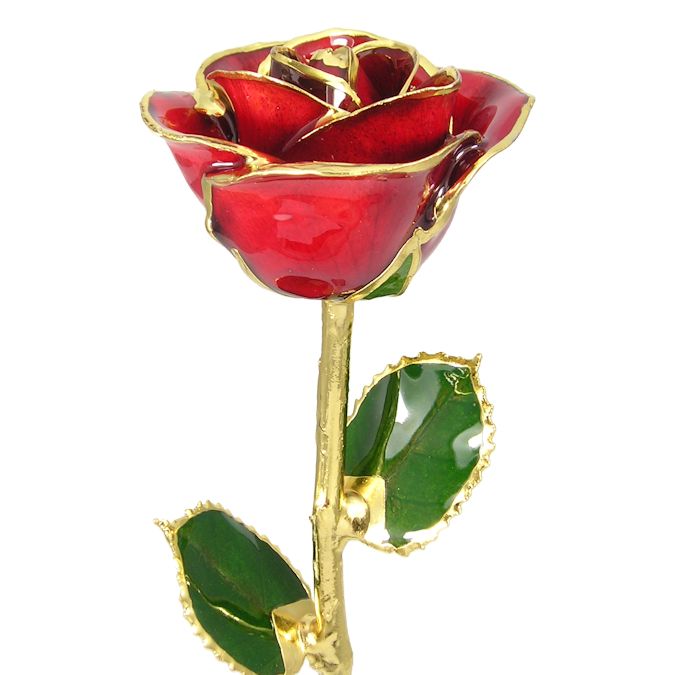
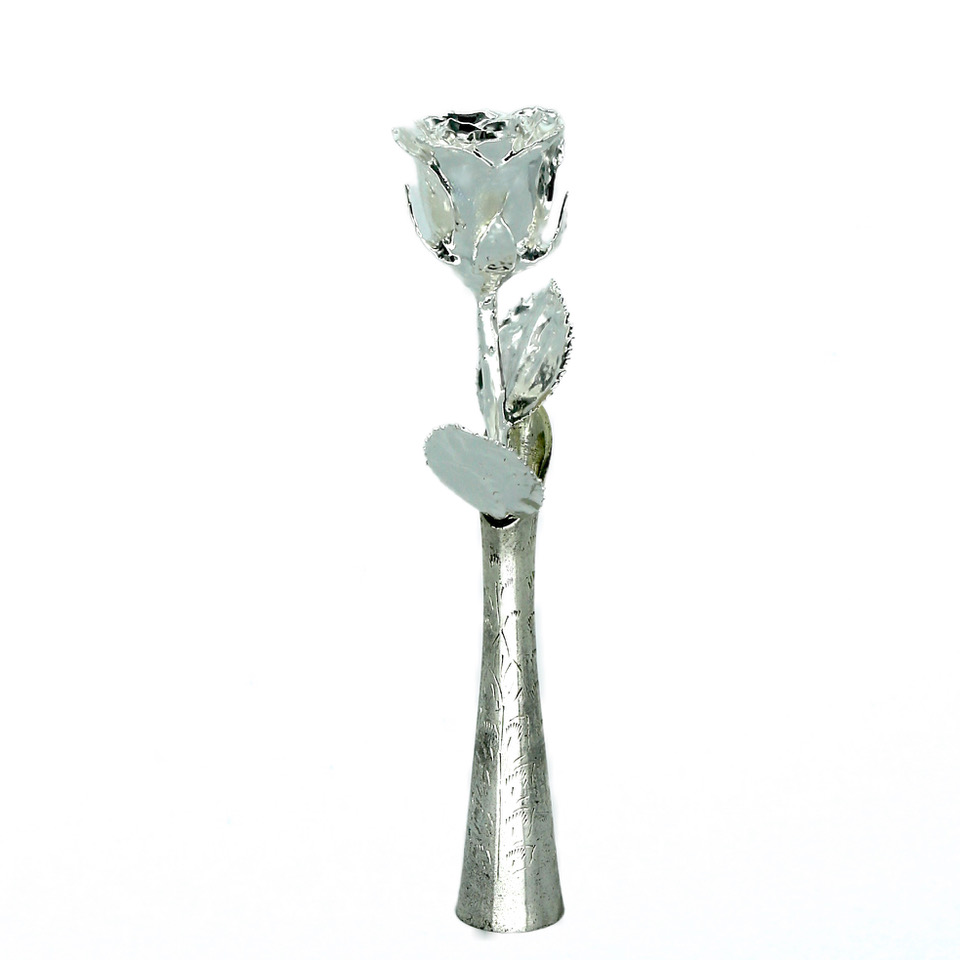
It depends entirely on which preservation method was used, and the two common ones are not close. A glycerine-preserved flower has its cell water replaced by a glycerine solution; Mississippi State University Extension notes this leaves the material soft and leathery, turns it a shade of brown, and makes it weep oily solution in humid conditions. The roses in this catalog are a different product: every listing describes a real rose 'preserved in lacquer' and then trimmed or fully dipped in 24k gold, silver or platinum, which is a hard sealed shell rather than a softened flower. The maker describes those as lasting a lifetime. What actually ages one is cumulative light exposure and, on silver, tarnish.
Two very different things get called a preserved rose
The word covers at least two processes with different results and different lifespans. Knowing which one you are buying settles every care question that follows.
Glycerine preservation
Stems are stood in a glycerine and water solution — Mississippi State University Extension describes a half-and-half mix, or as low as 30 percent glycerine — and the plant draws it up in place of water. Result: soft, leathery, browned. Works best on mature, lignified stems, not fresh growth.
Lacquer sealing and plating
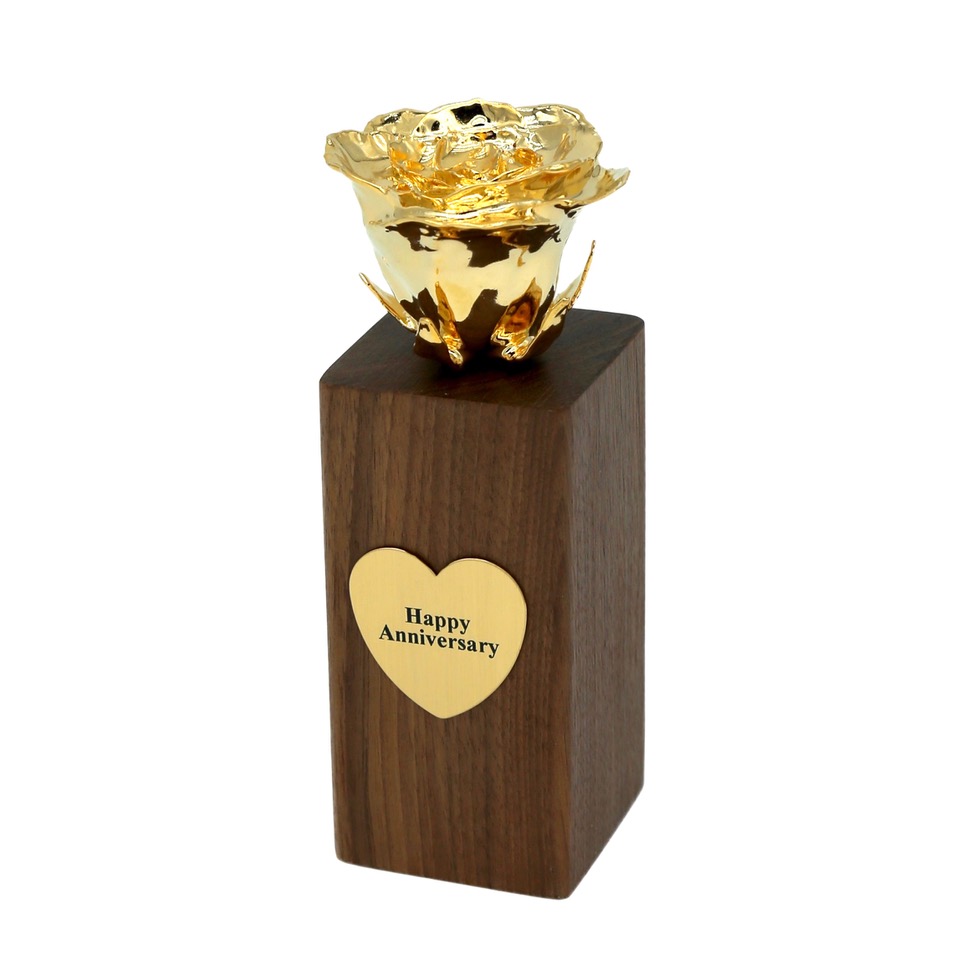
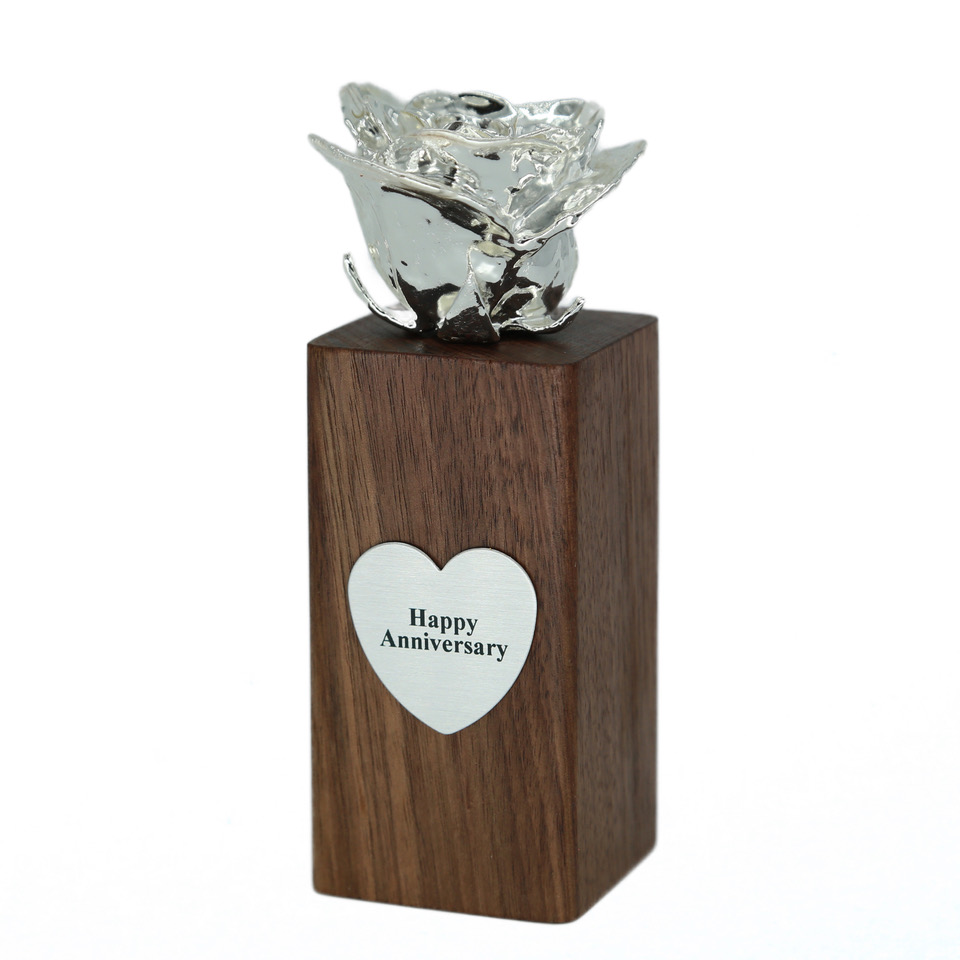
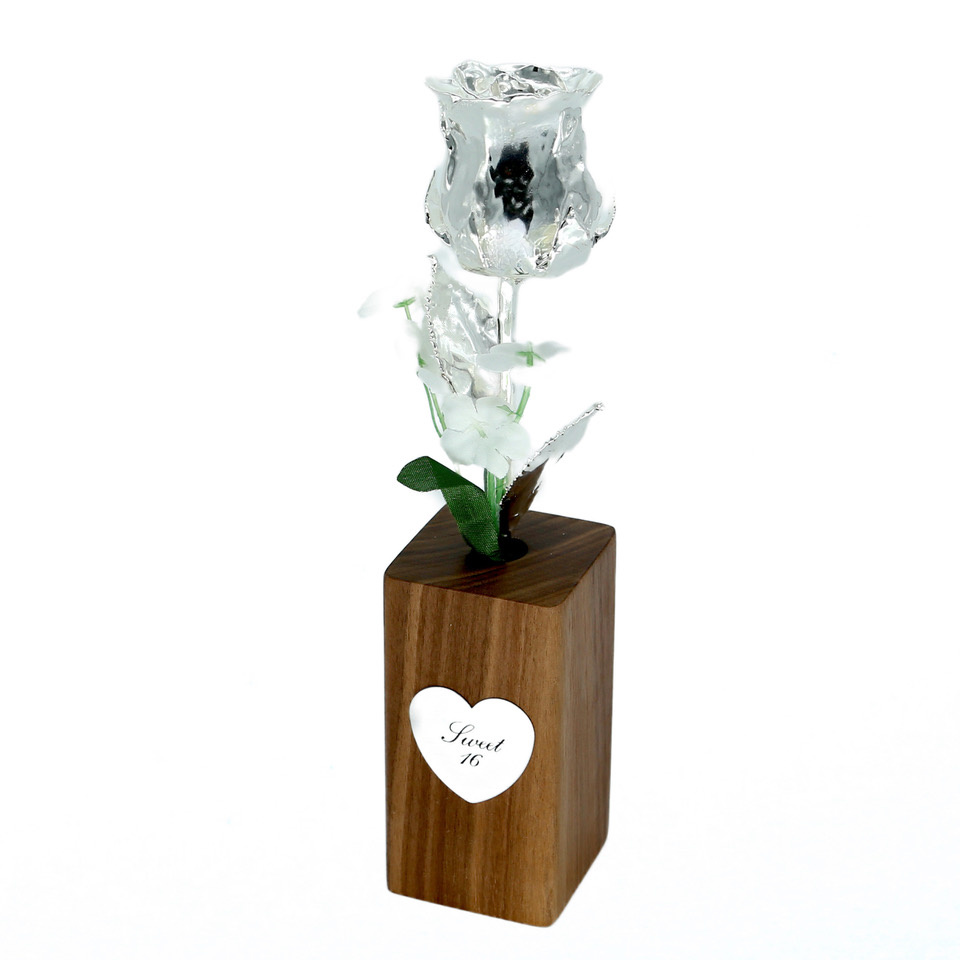
What this catalog sells. The phrase 'preserved in lacquer' appears in 184 of the 525 product descriptions. A freshly cut rose is sealed in lacquer and then either trimmed at the petal edges or fully electro-dipped in 24k gold, silver or platinum. Result: rigid, glossy, metal-edged, colour retained.
If a seller says preserved and the flower is still soft, it is the first process. If it is hard and metal-trimmed, it is the second, and it will not weep, wilt or need humidity control.
What the seller claims, and what actually sets the limit
Product descriptions in this feed use the phrases 'last forever' and 'last a lifetime' — for example, a 25th-anniversary listing reads that the rose is 'preserved and dipped entirely in pure silver to last forever'. Treat that as a claim about the coating, not a laboratory figure. Nothing in the feed states a number of years, and no independent test result exists for these specific items.
Two things realistically age a lacquered, plated rose, and both are controllable:
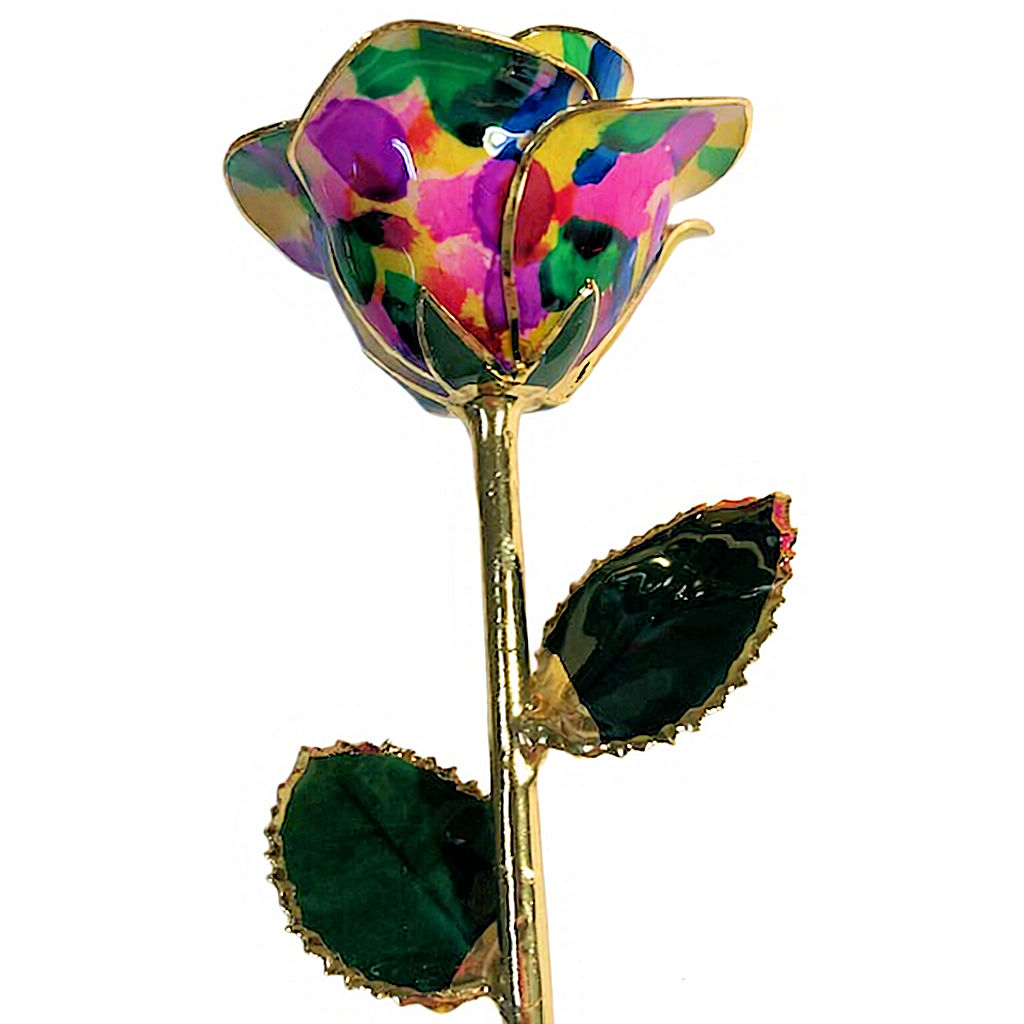
Light. Fading is cumulative and permanent, and it affects the visible petal colour on trimmed roses, where the rose's own colour still shows.
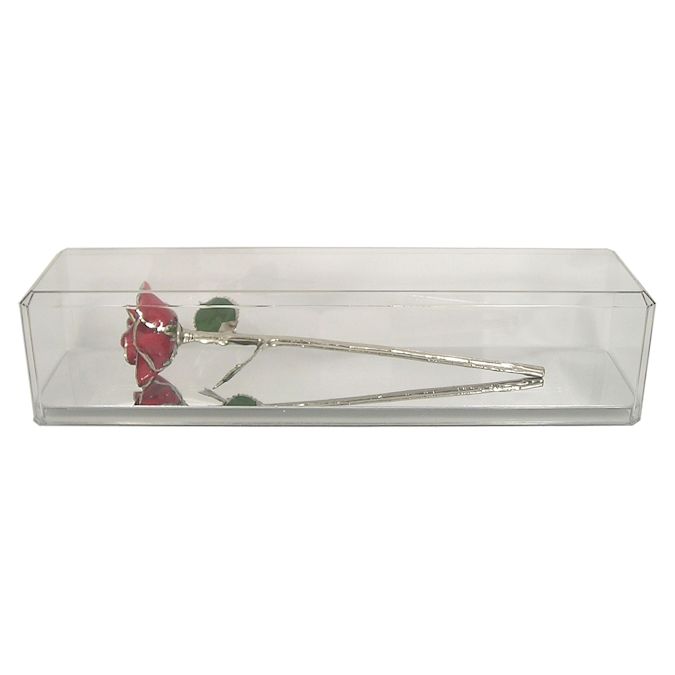
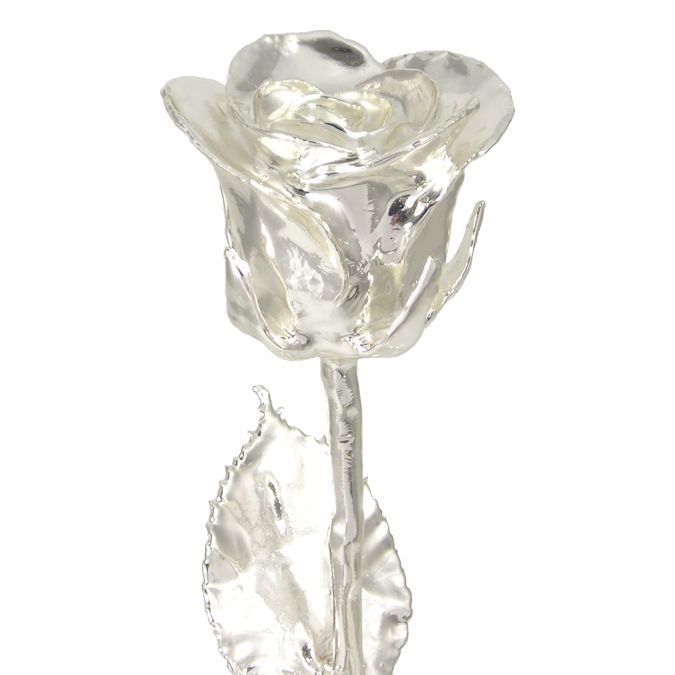
Tarnish. Silver reacts with sulphur-containing gases in ordinary air. Gold and platinum do not.
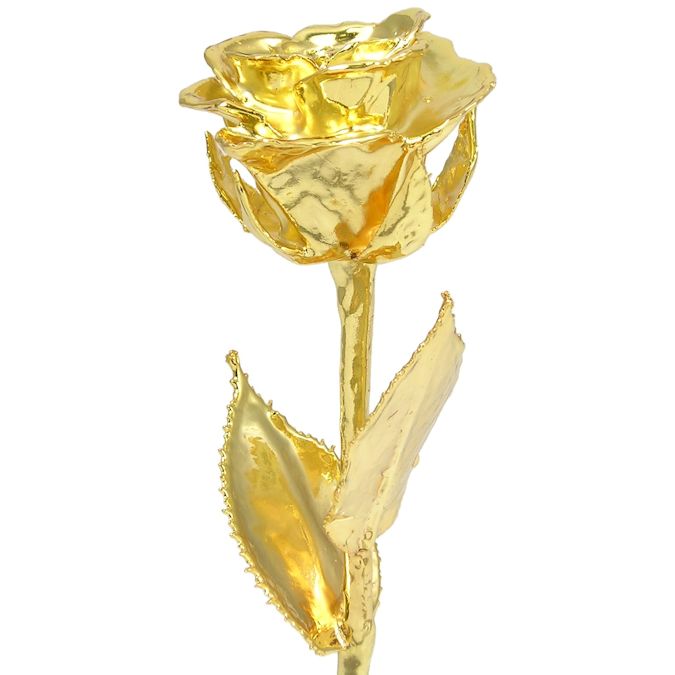
A fully gold-dipped rose kept out of direct sun has almost nothing left to go wrong with. A silver-trimmed coloured rose on a sunny windowsill has both problems at once.
Fading is dose-based: it depends on total lux-hours, not on how bright any single moment is. Museum practice illustrates the scale — conservation work on light damage describes 30 million lux-hours of exposure as roughly equivalent to 200 years of display at the 50 lux museum standard, and notes that many dyes show perceptible fading within 50 years even at that deliberately dim standard. A sunlit window is orders of magnitude brighter than 50 lux.
Two practical rules follow. First, a spot that is only lit when someone is in the room accumulates a fraction of the dose of a windowsill, because the total is hours multiplied by brightness. Second, UV filtering helps measurably: filtering UV is described as roughly equivalent to halving the light exposure. If your case or dome is near a window, a UV-filtering film on the window glass does more than moving the rose a foot back.
This is the single most useful fact when choosing a metal, and it is chemistry rather than quality. Silver's black tarnish comes from its sensitivity to sulphur-containing gases such as hydrogen sulfide in ordinary air; gold and platinum are noble metals with very little attraction for oxygen and are not oxidised or discoloured at moderate temperatures.
The catalog gives you the choice at nearly every price point: 120 listings mention silver, 88 mention platinum, and 102 mention 24k gold. If the piece is going into a sealed case and will be looked at rather than handled, silver is fine. If it will sit open in a kitchen, a bathroom, or a house where someone cooks with a lot of eggs or onions — both sulphur sources — platinum or gold is the lower-maintenance choice for the same money.
One caution: on a plated object the metal layer is thin, so repeated polishing is not a maintenance routine you want to start. Prevention beats correction here.
Humidity matters mainly for the glycerine type: Mississippi State University Extension warns that glycerin-treated foliage weeps solution from the leaves in humid conditions, and that those oily droplets can stain wooden surfaces and textiles. That is a real reason not to put a glycerine-preserved arrangement in a bathroom or above a radiator.
A lacquered and plated rose has no such problem, but it does have a coating. Lacquer dries by solvent evaporation into a hard finish that is harder and more brittle than oil-based or latex paint — which means it resists water and abrasion well but does not appreciate impact or flexing. Practical handling rules: lift by the stem rather than the bloom, dust with a soft dry brush or a blast of canned air rather than a cloth pushed between the petals, and keep solvents — nail polish remover, alcohol wipes, degreasing sprays — away from it entirely.
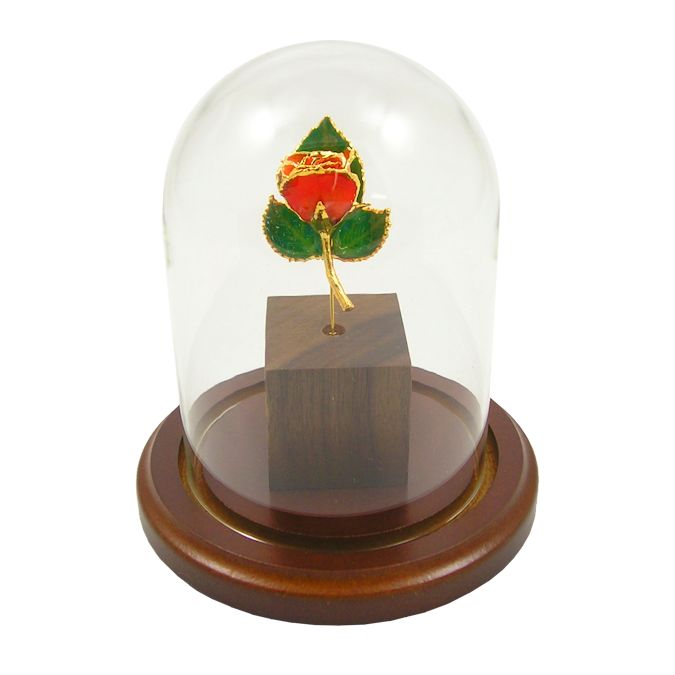
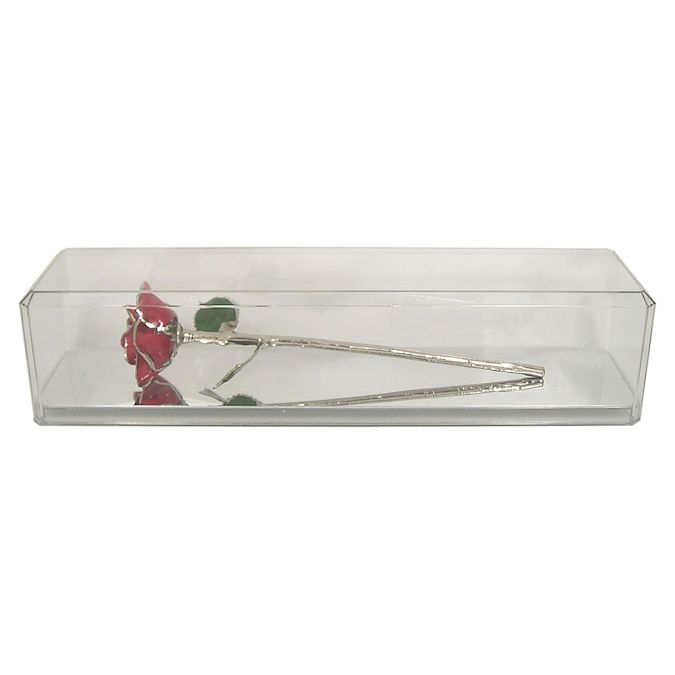
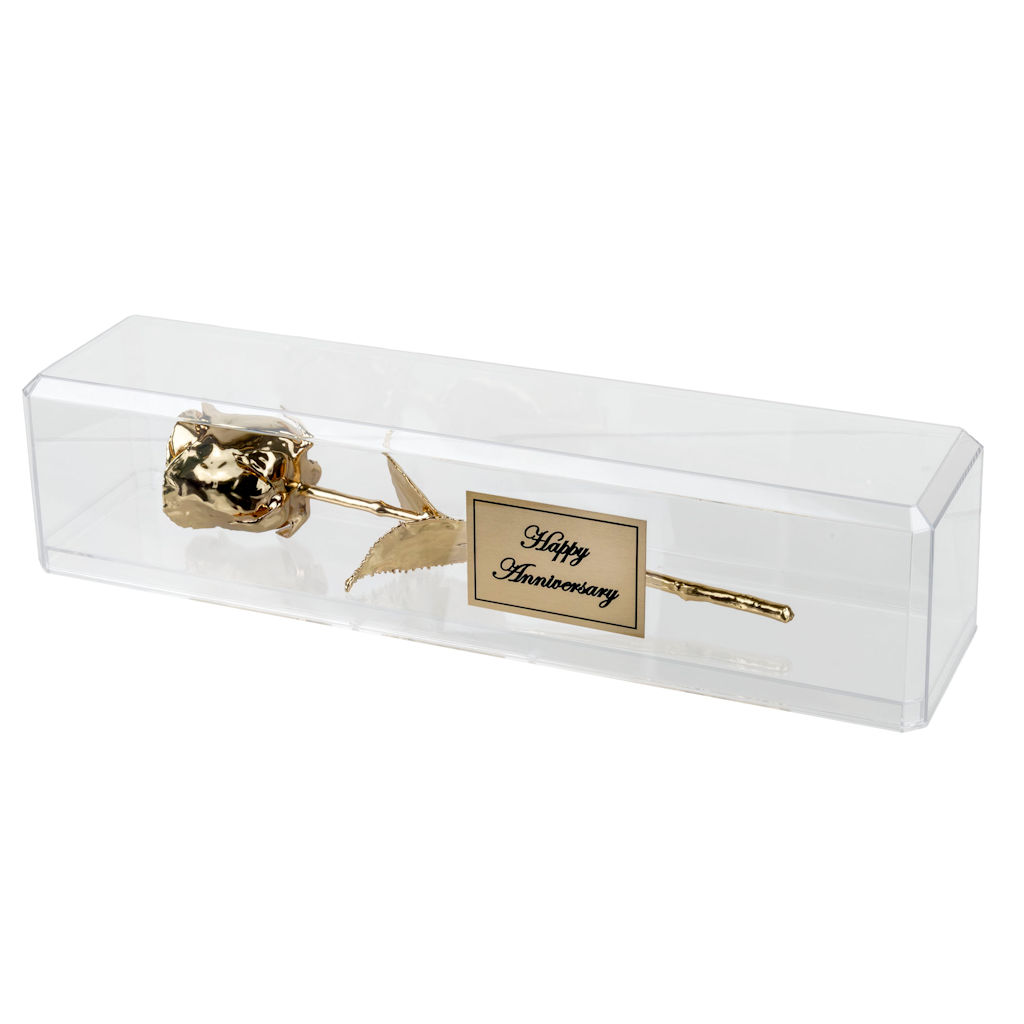
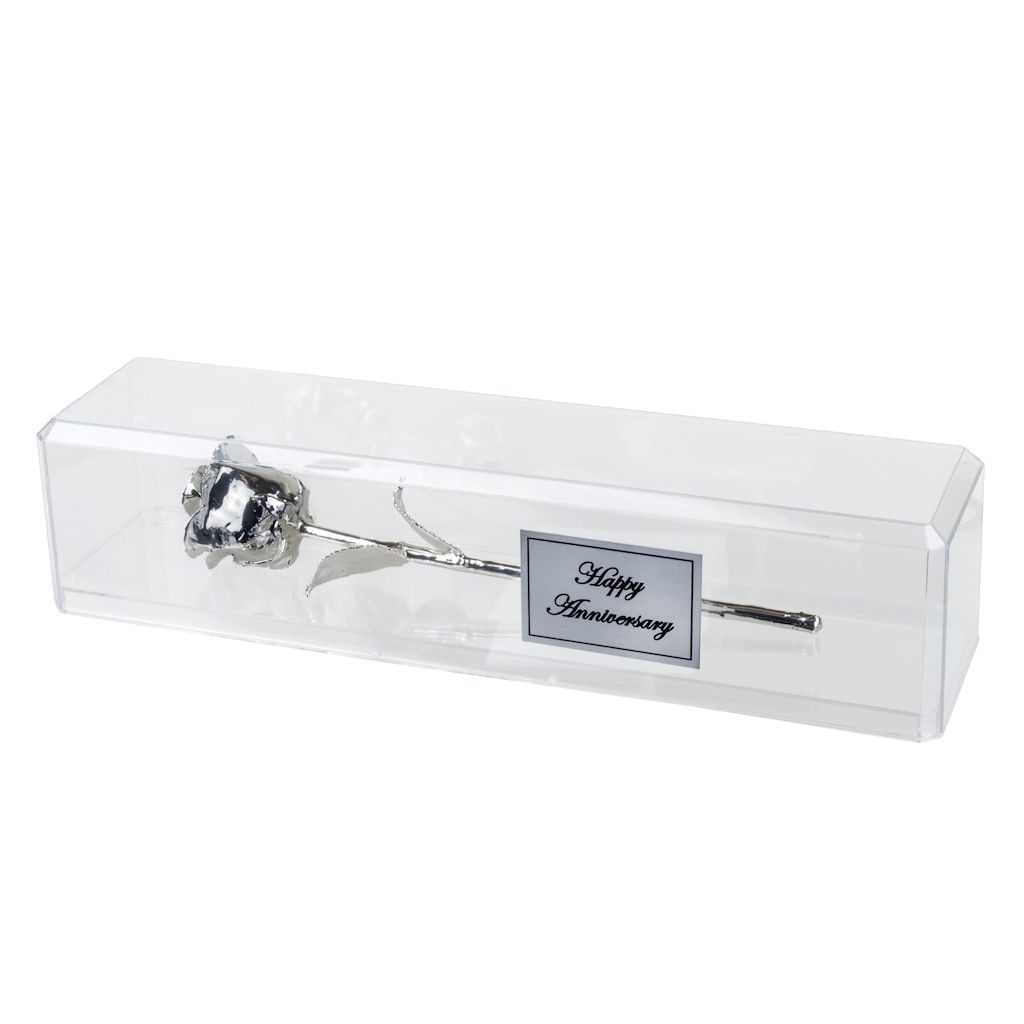
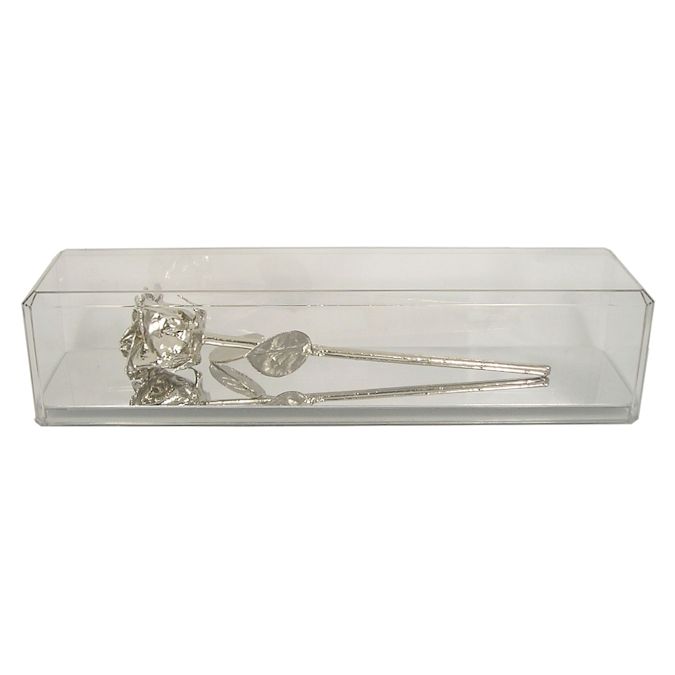
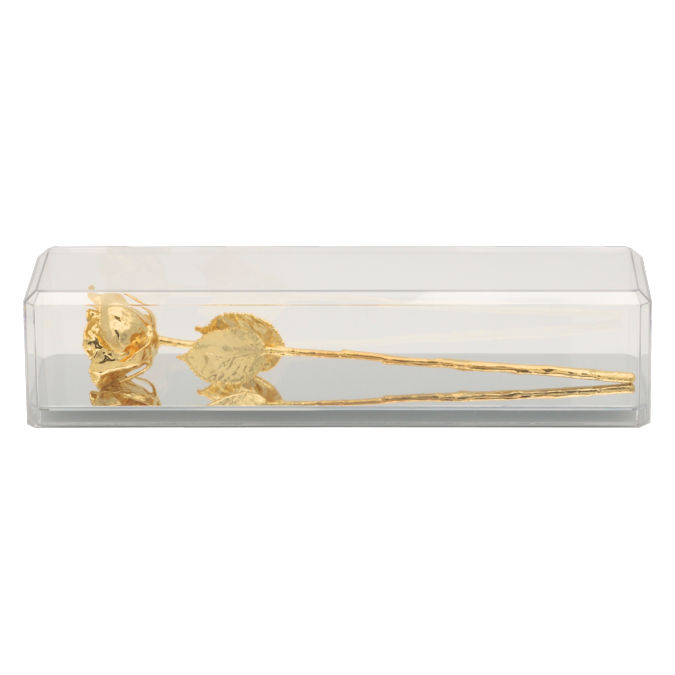
Ninety-three listings in the feed include an enclosure of some kind — a case, shadow box, museum case, dome, frame or plaque — and an enclosure solves dust and handling in one purchase. Real sizes from the listings: the acrylic museum case measures 14 x 4 x 3.5 inches; the rosewood case 14 x 4 x 4.5 inches with a black silk lining and an acrylic cover; the leatherette case 12.5 x 8.25 x 3.75 inches with black felt lining; the larger glass domes are 13 x 5.5 inches on a wooden base, the smaller 10 x 5.5 inches.
Match the case to the stem before you buy: the 8-inch roses fit the 10 x 5.5 inch domes and the smaller cases, the 11-inch roses need the 13 x 5.5 inch dome or a 14-inch case. A 17-inch rose belongs in a vase, not a case.
No. Removing or replacing the water is the whole point of preservation, and adding it back can only cause harm. A lacquered, metal-trimmed rose in a vase is a display object, not a cut flower — the vase stays dry.
Will the colour fade?
The metal will not, but the visible petal colour on a trimmed rose can, because fading is cumulative light damage. Keeping the piece out of direct sun is the single most effective thing you can do; UV filtering is described in conservation guidance as roughly equivalent to halving the exposure.
Can I put one in a bathroom?
A lacquered and plated rose is not harmed by humidity, but silver plating tarnishes faster in the presence of sulphur-containing gases, and a glycerine-preserved flower will actively weep solution in a humid room. A gold or platinum piece is the safe choice for a damp room; save the glycerine-preserved arrangements for dry ones.
How do I clean one?
Dry methods only: a soft brush or canned air between the petals. No solvents, no polish on a plated surface — the metal layer is thin and polishing removes material every time.
Are these actually real roses?
The listings state that each begins as a real, freshly cut rose that is then preserved in lacquer and trimmed or dipped. That is the maker's description of its own process, not an independent verification.
Editorial conclusions are drawn from the Love Is A Rose catalog data and the manufacturer documentation listed above; we do not claim to have used every product shown. Updated 2026-08-25. Corrections: contact us.
As an affiliate, Eternal Rose earns commission from qualifying purchases made through links on this page — at no extra cost to you. Prices are pulled from the retailer's live product feed and may have changed — the link always shows the current price.